1. Keep an exit open
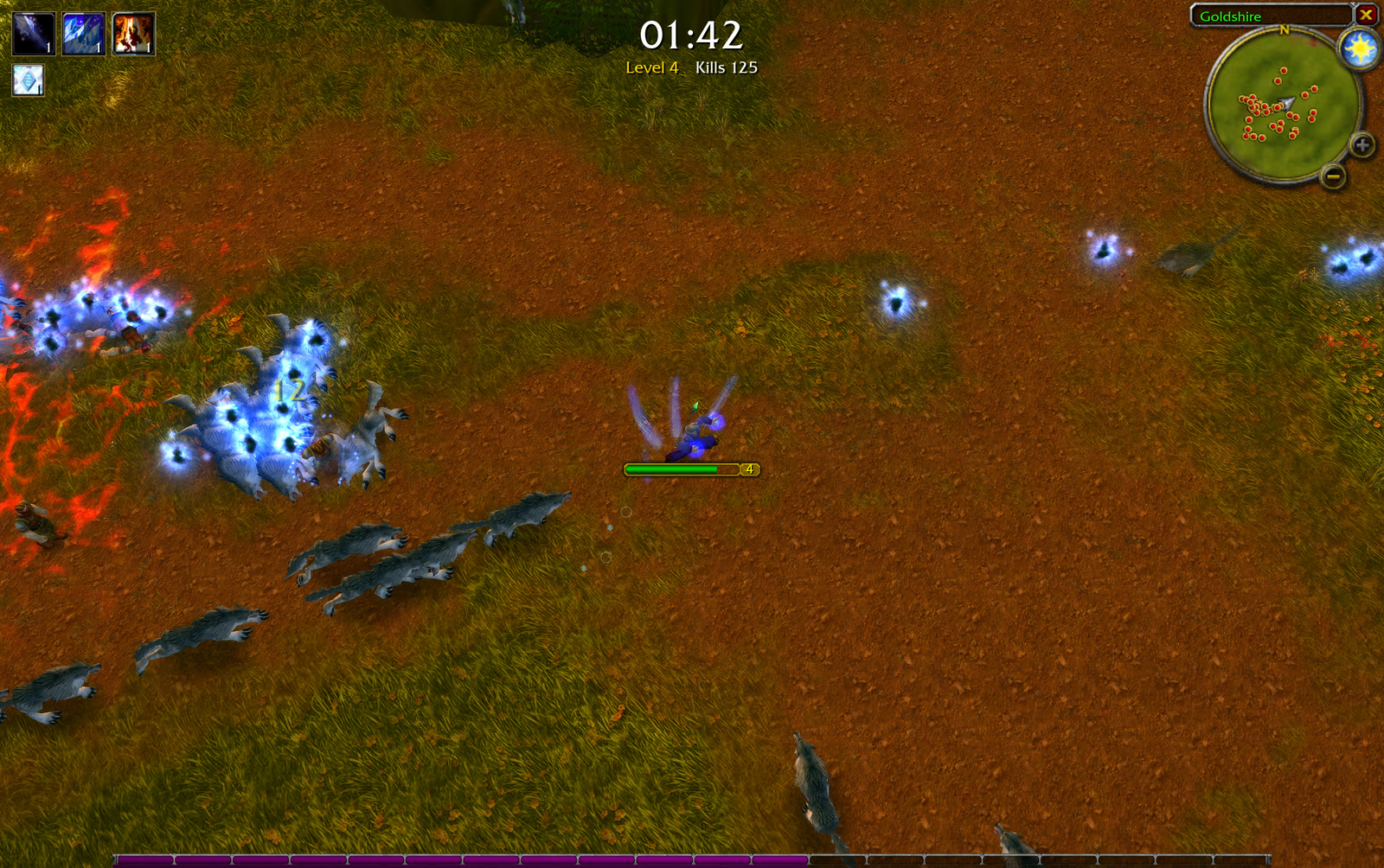
When enemies close in, the safest route is usually the one with the most open space. Move before the crowd surrounds you. Skirt the edge of a group, then turn toward a clear lane; cutting through its center can leave no room to recover.
In the community build, abilities cast automatically, so movement and positioning are your main constant decisions. Use the mouse to keep your hero facing the direction you want while the camera is locked. If a wave is too dense, prioritize space over a few extra pickups.
2. Read the upgrade, then the rarity
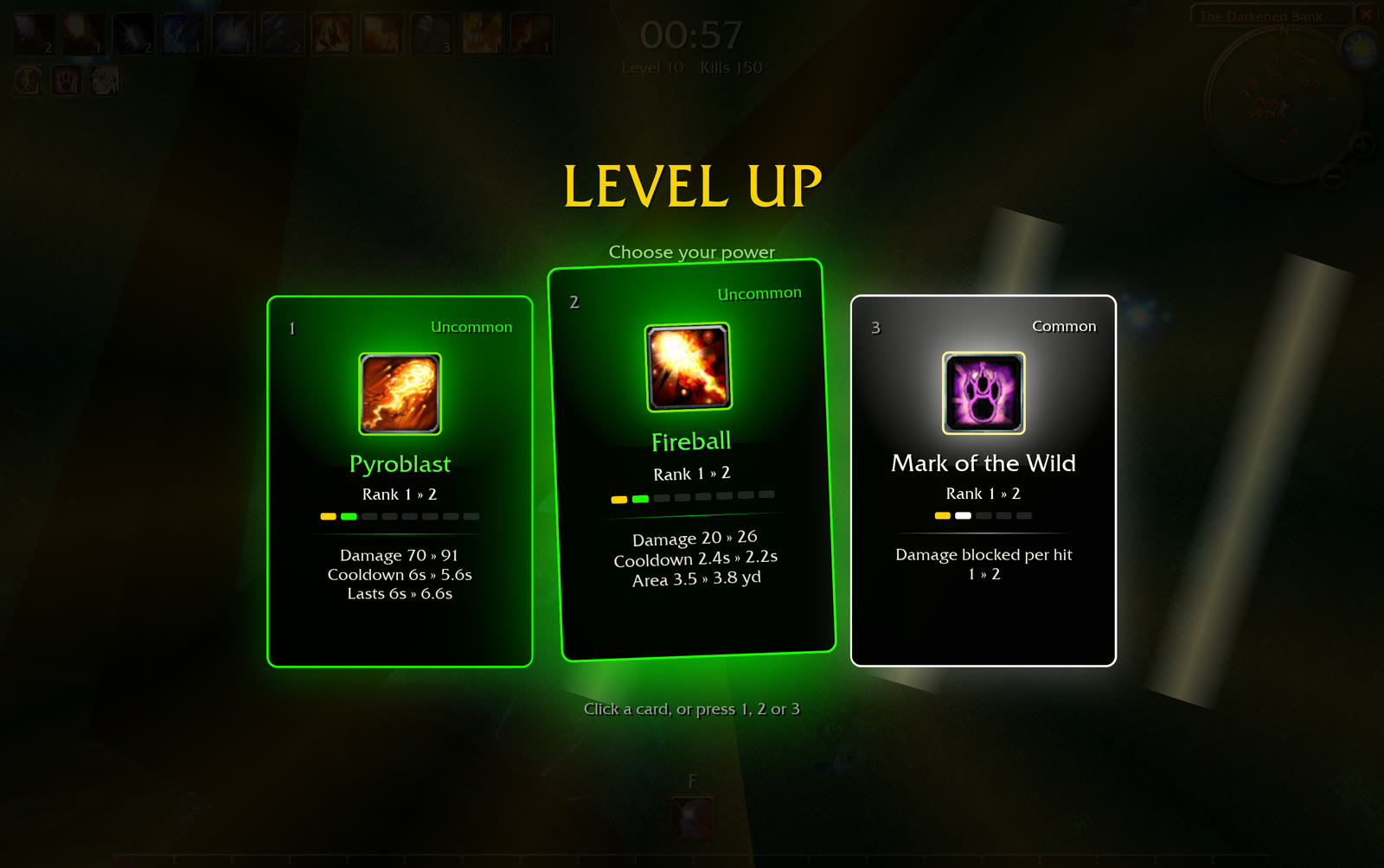
The community build displays three level-up cards and exact changes such as damage, targets, cooldown, or area. A rare-looking card is not automatically the best answer to your current problem. First ask what is ending your runs: being surrounded, failing to clear enemies, or struggling against a boss.
- Too many nearby enemies? Look for area, additional targets, or control so you can reopen a lane.
- Enemies survive too long? Compare damage and cooldown changes on the cards you actually receive.
- Bosses catch you? Favor a mix that lets you keep moving and maintain damage while dodging.
There is no fixed best build promised here. The offered cards and balance can vary by version and run.
3. Prepare before a boss arrives
The reconstruction's README describes bosses appearing every couple of minutes. As the wave gets harder, avoid letting a large pack fill the whole screen. Keep a path around it and check whether your current upgrades solve the pressure you are facing.
During the fight, use space to continue dealing damage. Watch the boss and the regular enemies together: escaping one threat into another often ends a run. In the community build, the class movement spell becomes available from level 5 on F; the original may use a different ability or key.
4. Review one cause after each run
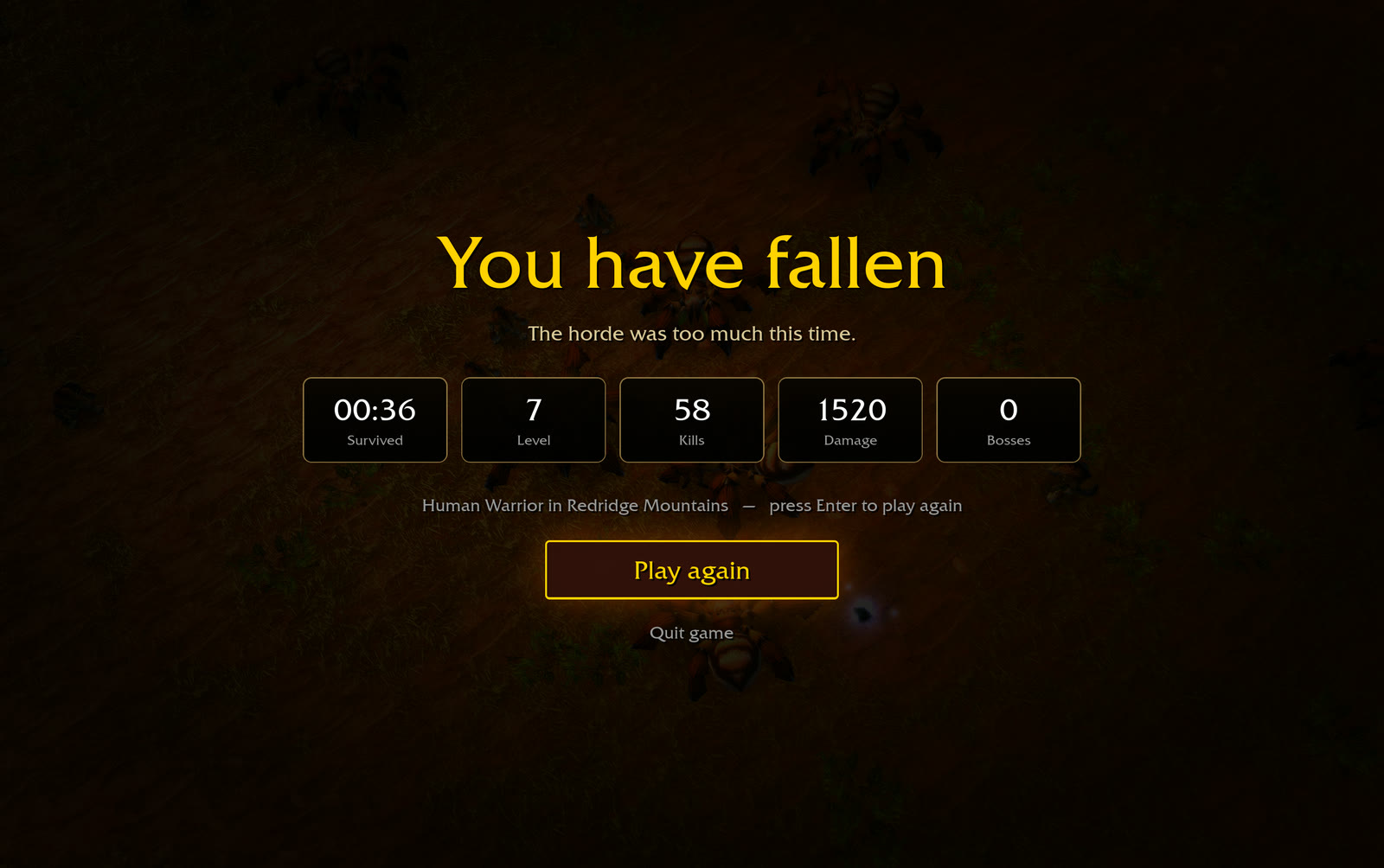
The community results screen shows survival time, level, kills, damage, and bosses. Compare one attempt with the next instead of changing everything at once. If you died early, try a safer route. If you survived longer but cleared slowly, compare your damage-oriented choices. Keep a short note about the moment the run became difficult.
Use the run assistant and local journal to turn these observations into a plan. For key bindings, start with the beginner guide; for play styles, see the class overview.